1. Market Positioning
How do you want to position yourself in the market? What added value do you want to offer? Which concept can you identify with? For which age groups do you want to create an offer?
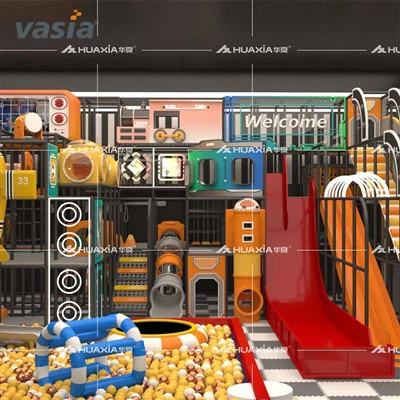
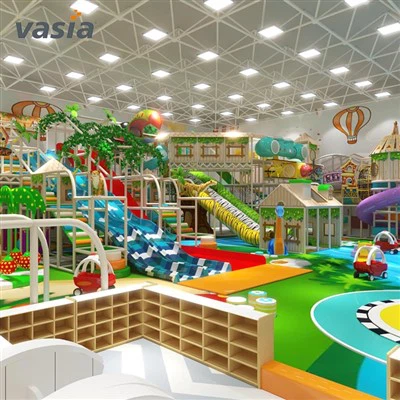
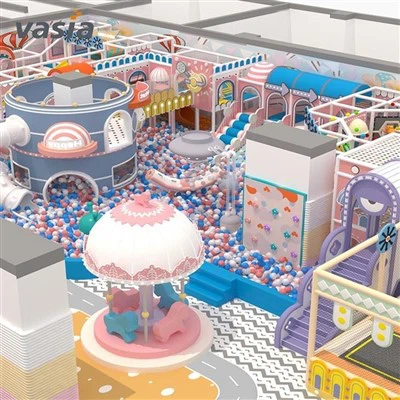
Here, "thinking out of the box" is the order of the day! An indoor playground for 3- to 12-year-olds can also be combined with a trampoline park and play and sports concepts for teenagers and adults. Our tip: Visit indoor playgrounds and find out which concepts appeal to you. For inspiration, we have some reference projects for you here.
In the course of these considerations, it is also worthwhile to research what trends and innovations there are in the industry, for example:
● Combination of play and jump
● Bounce and Ninja courses - also for children
● Interactive attractions
● Extensive fun climbing offer
● Creative and spectacular 3D theming
2. Choice of Location
When choosing the right property, you should pay attention to these economic and construction factors so that you can better assess whether the property is suitable for your indoor play facility, what costs you will incur, and where else you should invest, if necessary. First, about the economic factors:
Look and listen around the area, what other indoor recreational activities are offered in the surrounding area? Does your project fill a niche here?
It would be an advantage if your location is well connected to the public transportation network, but here there is a difference between urban and rural areas.
A highway exit nearby is optimal for you, as it will significantly increase the catchment area.
Tip: Get the demographic data of your catchment area - online or from the relevant authority.
Everyone who has ever been on the road with children knows that the way from the car to the destination should not be far. Therefore, the way from the sufficiently large parking lot to the entrance should be as short as possible.
Opportunities for fun and excitement also arise with room height, among other things. The higher, the better, is the motto here. However, we can also manage with lower room heights and have already come up with some technical tricks to get the most out of your property.
Escape routes, accessibility and structural fire protection are regulated differently from region to region; you should ask your responsible authority about this.
3. Attraction Mix
If you have successfully mastered the first steps, we will get to work with our planning. Based on an empty floor plan, we can work out a proposal according to your wishes. Now we determine with which play equipment you will firstly make the best use of your budget, secondly how you will achieve the best possible visitor capacity with the best possible variety and safety, and thirdly how you will stand out from your competitors.
Among the most popular attractions are:
● Slides, including donut and roller slides
● Spidertowers
● Softball arenas
● Multisport courts
● Low ropes courses
● E-kart tracks
● Climbing Volcanoes
● Trampolines
● Bouncy castles & inflatables
● Ninja course
● High ropes courses
● Indoor Caving
● Climbing walls
● Interactive games
4. Floor Plan
First, we create a floor plan of the entire building area, including proposals for other zones (e.g. check-in, checkroom, etc.), which also serves as a basis for dealing with authorities, permits and inquiries from other trades. We coordinate, together with other specialized companies also, all areas and precautions necessary for the operation (for example escape routes, fire protection aspects, sound insulation ...). Our floor plan also includes a non-binding cost estimate of all our attractions and services for your further planning.
5. Business Plan
Now it's all about numbers, data, facts and the predictable economic success of your project. What are the costs involved in setting up an indoor playground or family entertainment center and how can you recoup your investment within a suitable period of time? The most important prerequisite for financing is a solid business plan, which in the best case should be prepared by an independent and experienced consulting provider. A good business plan in this business area builds on location analyses, financial and liquidity planning. The content of the plan is based on all expected costs, construction plans and a precise description of the location. With a neutral and professional presentation of your project, we move on to the question of financing.
6. Financing
What investment are you ready to make? With regard to financing, there are several possibilities. Mostly it comes to a classical bank financing, but there are other alternatives, which can be suitable for you, e.g:
● Participation model
● Crowdfunding
● Funding
● Investors
7. Permits
The required permits vary considerably from region to region. A visit to your local authority will give you more information.
8. 3D Planning
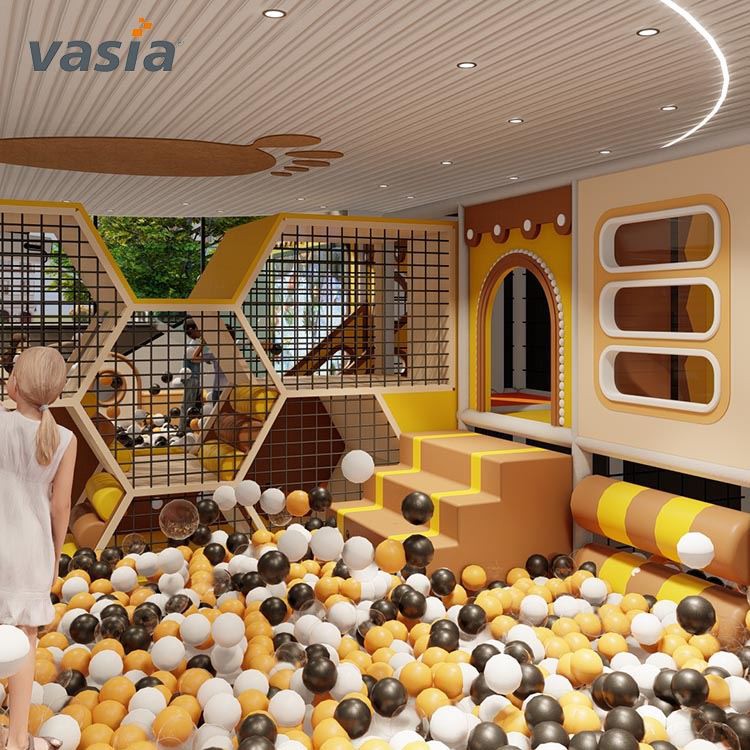
The ideas are finally taking shape! With the 3D planning, you can see our joint project in perspective and colour for the first time. It is created on the basis of the floor plan after further joint consultation.
9. Installation & Acceptance
It is time for the quick and safe assembly. We also coordinate with other trades and companies involved in our joint project. As soon as we have completed the installation, the system can be accepted by an accredited testing institute. We will be happy to coordinate the acceptance for you.
10. Opening
It is best to invest in the creation of a professional website with all the information for your customers a few months before the opening. Also create social media channels for your company in advance and let your future customers participate in the construction progress. This way you build a bond with the customers, promote your project and ensure that you have already created a community to fall back on in time for the opening. The opening party should be promoted in a big way. Be sure to invite the local press as well and make the most of the wave of initial attention.