Documenting the Cleaning Schedule
First, determine which surfaces are the high contact surfaces (frequently touched) and which are lower contact surfaces.
Decide how often each of these surfaces should be cleaned in your setting.
Decide which cleaning product/s you should use. It is vital that any cleaning chemical is able to reduce bacteria and viruses to safe levels. You should also seek guidance from the manufacturers of your play equipment on the best chemical to use. In general surfaces will need to be cleaned with a detergent to remove general dirt followed by a disinfectant that can remove microbes.
All contact surfaces should be cleaned in line with your cleaning schedule
In practice, PVC fabrics should be washed with a detergent solution followed by a viricidal chemical. Ensure the chemical is effective against norovirus and remains on the surface for the contact time. This is the amount of time that the product needs to stay ‘wet’ on the surface. The contact time will differ between chemicals but if it’s not left on the surface for the stated time the chemical will not be effective, you will be wasting your money and putting customers at risk of illness. When choosing a chemical make sure that the contact time is realistic for your setting.
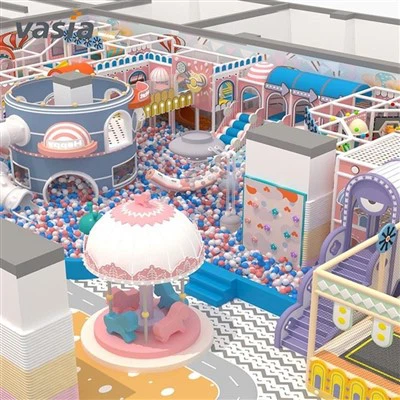
Ball pools should be cleaned regularly by removing the balls into a washable net bag and washing with detergent solution. The balls should then be immersed in a disinfectant able to reduce norovirus, the balls should remain submerged in the disinfectant solution for the correct contact time.
The ball pool frame should be vacuumed to remove dust and dirt and cleaned in line with other PVC fabrics. The balls should be inspected and any damaged ones discarded before replacing. Both the balls and the ball pool should be allowed to air dry before use. To prevent down time due to cleaning it is recommended that a second set of balls is provided.
It is important that loose/mobile items are not missed from the cleaning schedule. These should be identified in a check sheet to ensure they are included in each cleaning process.
The cleaning equipment used such as cloths and buckets must be kept separate from any other cleaning equipment. Providing a different colour for cloths and buckets will ensure they aren’t accidentally used in the wrong area. All cleaning equipment must be kept clean and replaced regularly. Single use cleaning cloths are recommended as this is the best way to prevent recontamination of surfaces.
Any soiled items, including any that have been placed in a child’s mouth, should be removed and isolated while they await cleaning. Any machine washable items must be washed at 60°C. Staff dealing with grossly soiled items should wear appropriate PPE while dealing with the item.
In addition to all areas should be kept free of litter and dust that could attract and or/ hide pests. A regular inspection of all areas should be undertaken daily.
Food
Any food available on the site should be in a separate area with easy to access hand washing facilities available with signage encouraging hand washing before handing food.
Staff Training
It’s easy to assume that cleaning is a simple task that can be given to anyone. However, cleaning in soft play settings is vital to keeping the customers and staff safe so it must be effective. All staff given the task of cleaning must be trained to clean in a way that will remove microbes and prevent re-contamination. A written cleaning schedule will show the items to be cleaned, the frequency, who is responsible, the chemical(s) and equipment to be used and instructions on how to clean the area/item. Recording the schedule will make it easier to train and monitor staff.
House Rules
It is important that symptomatic staff, visitors and contractors should be discouraged from visiting until 48h symptom-free.
Hand washing with liquid soap and warm running water and paper towels on entry.
Remove shoes when in the soft play area.
No food on the soft play structures (a separate area should be provided for eating).