



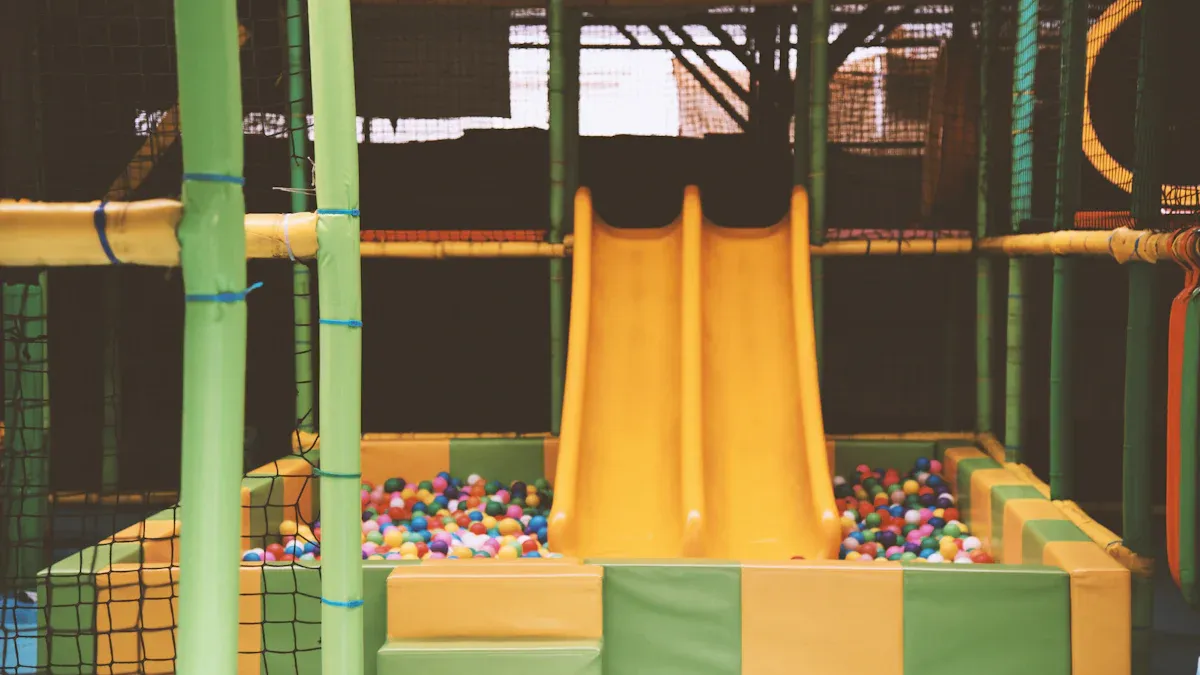
You want your child to have fun and be safe at a big slide indoor play centre. As a parent, you care about more than just fun. Safety is just as important as having a good time. Many parents feel the same way. Kids can get hurt from falling or rough play. Sometimes equipment does not work right and can cause injuries. You may also see dirty spots in the playground. There could be old food or places that are not cleaned well. You feel better when you know the playground cares about safety. Then your child can play inside and you do not have to worry.
- Common worries for parents include:
- Injuries from falls or equipment problems
- Bullying or mean behavior between kids
- Dirty or messy play areas
Key Takeaways
- Put safety first by picking indoor playgrounds that follow national safety rules. Check for certifications that prove the equipment is safe and kept in good shape.
- Pick slides that fit your child's age. Make sure the slide's height and slope are right for their age and skills. This helps lower the chance of getting hurt.
- Look for soft, bouncy surfaces under the slides. These surfaces help keep kids safe if they fall.
- Choose play areas that are clean and taken care of. Regular cleaning and fixing show the playground cares about safety and being clean.
- Make sure trained staff are watching the play areas. Staff should be there to watch kids and help fast if something goes wrong.
Safety First

When you go to a big slide indoor play centre, you want your child to be safe. Putting safety first means you should look for clear rules, strong equipment, and soft places to land. You can tell if an indoor playground is good by checking if it follows important safety standards and uses safe materials.
Safety Standards
Not every slide or play area is made the same way. Some places follow strict rules to keep kids safe, but others do not. You should pick centres that meet national or international safety standards. These rules help lower the chance of injuries and make sure the equipment lasts a long time.
Here is a quick look at some main safety standards for indoor playgrounds:
|
Standard |
Description |
|---|---|
|
ASTM F1487 |
Standard Consumer Safety Performance Specifications for Playground Equipment |
|
CAN/CSA-Z614 |
Children's Playspaces and Equipment standard for public-use playgrounds |
|
CPSC |
Guidelines for designing, building, and maintaining public playgrounds |
|
EN 1176 |
European Standard for safe playground equipment |
Tip: Play centres that follow these standards usually have fewer accidents. Studies show that using safety standards can cut
playground injuries almost in half. In North Carolina, stronger rules led to a 22% drop in injuries over three years.
You should also look at the materials around slides and play areas. Soft, impact-absorbing surfaces like pour-in-place rubber, DuraSoft carpet, or modular tiles help protect kids from falls. Research shows falling on hard surfaces like asphalt or concrete is much more dangerous. For example, the injury rate for asphalt is six times higher than for sand, and concrete is five times higher than rubber. Picking a centre with soft padding and strong enclosures really helps.
Certifications
Certifications are like badges that show a play centre cares about safety. When you see these, you know the centre has passed important checks and follows safety rules.
Here are some common certifications you might see:
|
Certification |
Description |
|---|---|
|
ASTM F1918 |
U.S. safety standard for soft contained play equipment, checks structure and safety |
|
EN 1176 |
European safety standard for indoor and outdoor playgrounds |
|
CE Mark |
Shows the equipment meets EU safety rules |
|
AS3533.4.2-2013 |
Australian standard for indoor playground safety |
|
CSA Z614 |
Canadian standard for public-use play equipment, covers kids from 18 months to 12 years old |
If you see these certifications, you can feel better that the slides and play areas are safe. These marks mean the centre uses strong materials, checks equipment often, and follows the newest safety rules.
Note: Always ask staff about their safety certifications and how often they check their equipment. A good centre will be happy to tell you this.
When you put safety first, your child can enjoy slides and play zones without worry. Look for soft surfaces, strong enclosures, and clear certifications. These steps help you pick a safe indoor playground for your family.
Big Slide Design
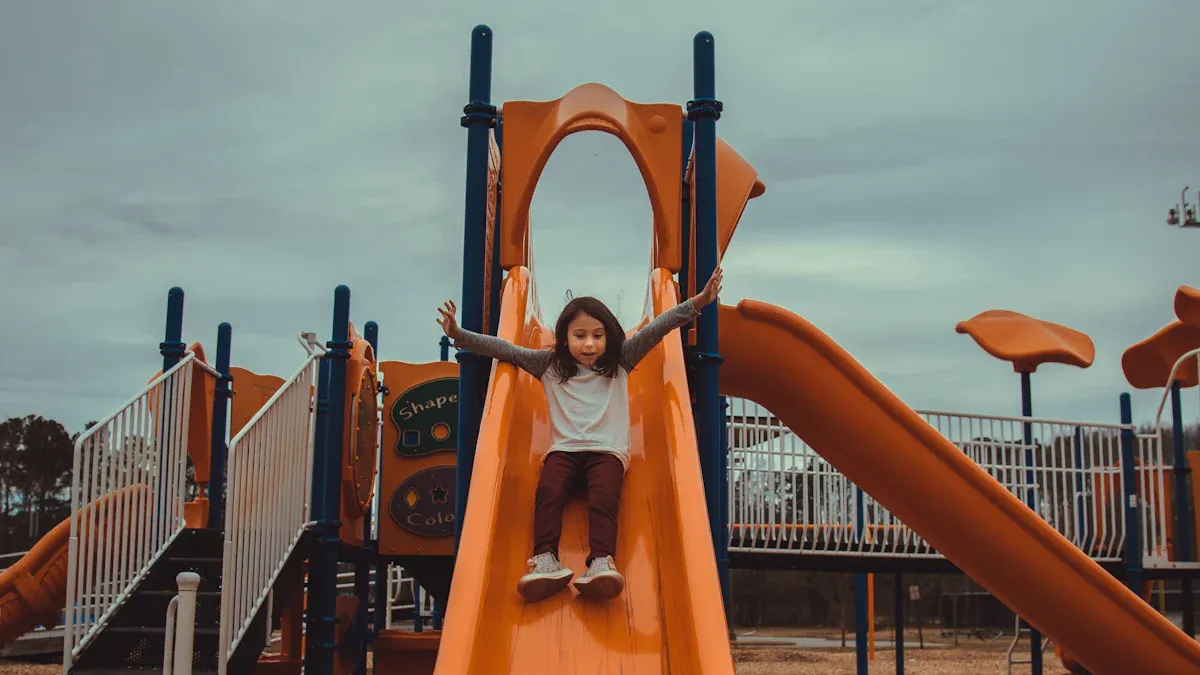
When you walk into an indoor playground, the big slides often catch your eye first. They look exciting and promise lots of fun, but you want to make sure they are safe for your child. Let's break down what you should look for in slide design so you can feel confident about your choice.
Age Appropriateness
Not every slide fits every age. Some slides are too tall or steep for little ones, while others might seem boring to older children. You want to match the slide to your child's age and skill level. The Consumer Product Safety Commission (CPSC) and other safety groups divide playground equipment into three main age groups:
-
Infants and toddlers (under 2 years): Slides should be low, simple, and padded.
-
Preschoolers (2–5 years): Slides can be a bit higher, but need guardrails and easy steps.
-
School-aged children (5–12 years): Slides can be taller and more complex, with climbing features.
You can use this table to see which age groups face the most risk on big slides:
|
Age Group |
Injury Type |
Likelihood of Injury |
|---|---|---|
|
< 3 years |
Lower extremity injuries |
40 times more likely |
|
< 3 years |
Brain injuries |
30% more likely |
|
< 3 years |
Lap-related injuries |
4 times more likely |
|
3-5 years |
Lower extremity injuries |
15% likelihood |
|
3-5 years |
Brain injuries |
Less likely than < 3 yrs |
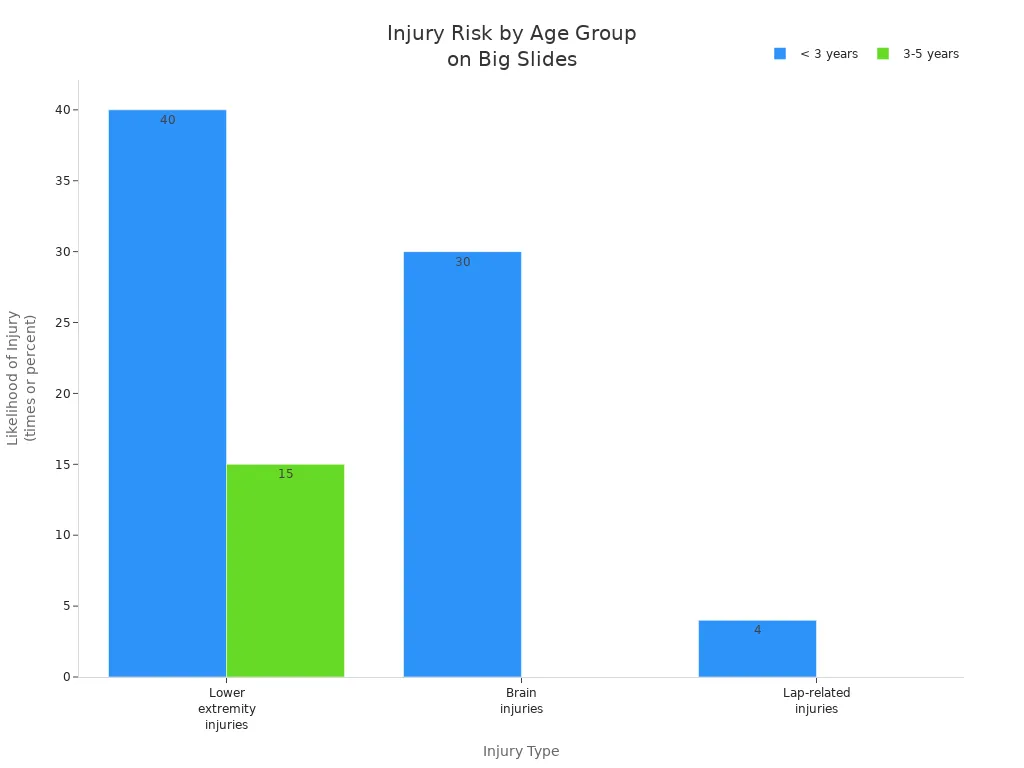
Younger children, especially those under 3, have a much higher chance of getting hurt on big slides. Always check if the slide is meant for your child's age. If you see a sign with age recommendations, follow it. If you're not sure, ask a staff member.
Tip: If your child is under 3, look for slides that are short, have gentle slopes, and soft landings. Avoid letting them go down on your lap, as this can actually increase the risk of leg injuries.
Slide Height and Slope
The height and slope of a slide matter a lot for safety. Slides that are too tall or steep can lead to more serious injuries. Experts recommend these guidelines for indoor slides:
-
For toddlers:
- Maximum incline: 24°
- No part of the slide should be steeper than 30°
- Slide width: 8 to 12 inches
-
For preschool and school-age children:
-
Maximum incline: 30°
-
No part of the slide should be steeper than 50°
-
Studies show that children aged 0-4 are 2.45 times more likely to have severe injuries when falling from heights between 1m and 6m compared to falls from less than 1m. This means that lower slides with gentle slopes are much safer for younger kids. The quality of the surface under the slide also makes a big difference. Rubber or padded surfaces help reduce the risk of serious injuries if a child falls.
Note: Always check the height and angle of the slide before letting your child play. If it looks too steep or high for their age, choose another slide.
Padding and Maintenance
Padding is your child's best friend when it comes to indoor slides. Good padding cushions falls and helps prevent bumps and bruises. Look for slides with thick, soft padding at the bottom and along the sides. The landing area should feel springy, not hard.
Regular maintenance keeps slides safe and smooth. Here's what you should expect from a well-run indoor playground:
|
Maintenance Practice |
Description |
|---|---|
|
Daily Inspections |
Quick checks for wear and tear, making sure everything works and is safe. |
|
Monthly Checks |
Deeper look at the structure and connections of the slides. |
|
Special Care for Slides |
Clean slides with a damp cloth and use silicone spray for a smooth ride. |
|
Annual Playground Inspection |
Bring in experts to check all equipment and keep records of their findings. |
|
Document All Maintenance Efforts |
Keep track of all checks and repairs for safety and legal reasons. |
You can also ask staff how often they inspect and clean the slides. A good indoor playground will have a clear schedule and keep records of all maintenance. If you see torn padding, loose bolts, or dirty surfaces, let staff know right away.
Tip: Slides that look shiny and clean are not just more fun-they are usually safer, too! Regular cleaning and maintenance help prevent accidents and keep the play area inviting.
When you pay attention to age-appropriate design, safe slide height and slope, and good padding and maintenance, you help make sure your child has a safe and fun experience at the indoor playground.
Indoor Playground Zones
Separate Areas for Ages
When you go to an indoor playground, you want your child to be safe. It helps when kids play with others who are the same age. Play areas that are split by age keep younger and older kids apart. This makes accidents less likely. It also means each child gets the right amount of challenge and fun. You might see signs or walls that show which area is for which age. Sometimes, staff will help guide kids to the right place.
Here's a simple chart about age groups and good activities:
|
Age Group |
Recommended Activities |
|---|---|
|
2 to 5 years |
Climbers, ladders, crawling spaces, smaller steps, independent play items like trike paths, sand play, and musical instruments |
|
5 to 12 years |
Rope climbing, complicated moving slides, horizontal bars, problem-solving activities, learning panels, and fitness equipment |
You can use this chart to see if the play area fits your child. When kids play with others their age, they feel safer and more sure of themselves.
Variety of Equipment
A good indoor playground has more than just big slides. You want your child to try many things and have fun in different ways. The best playgrounds have:
- Big slides
- Soft play areas
- Ball pits
- Trampolines
- Ninja courses
- Role play areas
- Obstacle climbing structures
Each piece of equipment helps kids learn new skills. Climbing and crawling make kids stronger and help with balance. Puzzle games and sensory panels help kids think and be creative. Playing with others teaches teamwork and how to solve problems.
Tip: Try to find play areas with lots of colors and things to touch. Touching different textures helps kids learn and play together.
Having many play areas keeps things fun and new. Your child will move around, meet friends, and enjoy every visit to the indoor playground.
Clean and Well-Maintained
It is important to keep indoor playgrounds clean and in good shape. You want your child to play where germs and dangers are not a problem. Clean places help stop sickness and make every visit nice.
Cleaning Protocols
Always check how the playground keeps things clean. Good centres have strong cleaning rules to keep everything tidy. Here are some things to look for:
- Staff wipe down slides, railings, and handles many times a day.
- They use cleaners that are safe for kids and not too harsh.
- There are regular checks and deep cleaning on a set plan.
- Staff learn the right way to clean and follow hygiene rules.
- Cleaning times are posted, and hand sanitizer is easy to find.
Most playgrounds follow health rules from local and world groups. They use safe tools like microfiber cloths and gentle cleaners. The CDC says to clean more often when it is busy. You can ask staff how often they clean and if they do extra cleaning when there are more kids. A clean playground helps everyone stay healthy.
Tip: If you see staff cleaning while you are there, it shows the centre cares about keeping things clean and safe for your child.
Maintenance Checks
Regular checks help keep the playground safe for all kids. Staff look for things like ripped padding, loose screws, or broken barriers. Here are some common problems and how they get fixed:
|
Maintenance Issue |
Description |
Recommended Action |
|---|---|---|
|
Wear and Tear of Surfacing |
Cracks or holes in the floor or padding |
Fix damage as soon as possible |
|
Rust and Corrosion |
Metal parts getting rusty |
Stop rust and fix it quickly |
|
Loose or Broken Hardware |
Bolts or screws coming loose |
Check and tighten bolts often |
|
Inadequate Safety Barriers |
Missing or broken barriers around play areas |
Make sure all barriers are strong |
Staff should check the equipment often and fix problems fast. These checks help stop accidents and keep kids safe. You can ask about their check-up schedule and look for signs that things get fixed. When you see a clean and well-cared-for playground, you know your child can play safely and have fun.
Supervision and Staff
You want your child to have fun at an indoor playground, but you also want to know that someone is watching out for their safety. Good supervision makes a big difference. Trained staff keep an eye on children, help prevent accidents, and step in when needed. When you visit an indoor playground, look for staff who are alert, friendly, and ready to help.
Staff Training
Staff at a quality indoor play centre do more than just watch. They go through hands-on training with real-life practice and interactive lessons. This helps them know what to do in any situation. You can feel better knowing that staff learn how to spot problems, keep things clean, and talk to kids and parents.
Here's what staff training usually covers:
|
Training Aspect |
Description |
|---|---|
|
Daily Inspections |
Check for broken equipment and make sure everything is clean. |
|
Weekly Inspections |
Look over play equipment and check that safety signs are easy to see. |
|
Monthly Inspections |
Review all safety gear and write down any repairs. |
|
Hygiene Protocols |
Use safe cleaners and keep themselves clean. |
|
Communication Skills |
Explain rules and help solve problems between kids. |
|
Emergency Response Protocols |
Know what to do if something goes wrong. |
Staff also learn about safety inspections, hygiene, talking with kids, and what to do in an emergency. You can always ask staff about their training if you want to know more.
Tip: A good indoor playground will have enough staff for the number of children. This helps everyone stay safe and have fun. Federal law says there should be set staff-to-child ratios for different age groups. The right ratio means staff can watch everyone closely and help right away if needed.
Emergency Procedures
Accidents can happen, even in the safest places. That's why every indoor play centre needs clear emergency procedures. Staff should check equipment often, use signs to warn about dangers, and make sure only the right ages use certain areas. You should see staff nearby, ready to help if something goes wrong.
Here are some things you can do to stay prepared:
-
Find out where the first aid kit is and how to use it for small injuries.
-
Show your child the exits and pick a spot to meet if you get separated.
-
Watch for signs that explain the rules and what to do in an emergency.
When you see staff who are trained and ready, you know your child is in good hands. Good supervision, strong training, and clear emergency plans help make indoor playgrounds safe and fun for everyone.
Visibility and Comfort
Parental Supervision
You want to keep an eye on your child while they play. Open layouts in an indoor playground make this much easier. When you can see most of the play area from one spot, you feel more relaxed. You do not have to worry about missing your child or losing sight of them in a crowded space. Open designs also help staff watch over all the children, which keeps everyone safer.
A good indoor playground uses smart design to make supervision simple. Here's what you should look for:
-
Wide, open spaces let you spot your child quickly.
-
Clear paths help children move around without bumping into each other or equipment.
-
Spacious main areas give children room to play and have fun without feeling crowded.
When you can see your child at all times, you feel more confident letting them explore. You also notice if something is wrong right away.
Seating Areas
You deserve a comfortable place to sit while your child plays. The best indoor playgrounds offer cozy seating that lets you relax and watch your child at the same time. You might find soft chairs, benches, or even couches near the play zones. Some places add tables and chairs so you can enjoy a snack or drink.
Look for these features in seating areas:
-
Comfortable seats for parents and caregivers to rest.
-
Tables and chairs for snacks or drinks.
-
Seating close to the play area, so you never lose sight of your child.
-
A friendly space where you can chat with other parents and maybe make new friends.
A good seating area helps you feel welcome and part of the indoor playground community. You can relax, socialize, and still keep your child in view. This makes every visit more enjoyable for both you and your child.
Choose the Right Indoor Playground
Checklist for Parents
You want your child to have a safe and fun experience at a big slide indoor play centre. A checklist helps you spot the best places and avoid hidden dangers. When you visit or research, keep these points in mind:
|
Checklist Item |
Description |
|---|---|
|
Measure All Openings |
Make sure openings are not too wide or narrow to prevent children from getting stuck. |
|
Identify Protrusion Hazards |
Look for anything that could catch on clothing, like bolts or hooks, especially near slides. |
|
Document and Remediate |
If you see a problem, write it down and ask staff to fix it or block off the area. |
|
Supervision and Sight Line Maintenance |
Check that you can see your child from most spots and that staff can watch all areas. |
|
Environmental Hazard Assessment |
Look for broken glass, sharp edges, or anything unsafe in the play area. |
-
Make sure slide platforms are deep enough for your child's age group.
-
Check that slide chutes have high sides and no gaps.
-
Inspect slides for missing parts or signs of damage.
Tip: A good big slide indoor play centre will welcome your questions and show you their safety features.
Questions to Ask
When you want to choose the right indoor playground, asking the right questions makes a big difference. Here are some to help you feel confident:
|
Key Safety Features |
Description |
|---|---|
|
Flooring and Padding |
Is the flooring soft and well-padded to protect children from falls? |
|
Clear Age-Specific Areas |
Are there separate play zones for different age groups? |
|
Visible Safety Signage |
Are rules and safety tips posted where everyone can see them? |
|
Dedicated Staff and Supervision Policies |
Are staff always present and watching the play areas? |
You can also ask about cleaning schedules, staff training, and emergency plans. When you take these steps, you make choosing the right indoor playground easier and safer for your family. You help your child enjoy every visit and make great memories at a big slide indoor play centre.
You want your child to have fun and be safe at an indoor playground. When you go to these places, check for clear safety rules. Look for equipment that fits your child's age. Make sure the playground is checked and fixed often. There should be enough room for kids to play without bumping into each other. Staff should watch the play areas at all times. Trust what you feel as a parent. Use this simple checklist when you visit:
|
Safety Feature |
Description |
|---|---|
|
Cleanliness |
The playground is neat and cleaned many times a day. |
|
Soft Surfaces and Padding |
Padding helps stop injuries if kids fall. |
|
Equipment Maintenance |
Play structures should not be broken or worn out. |
|
Supervision |
Staff are always there and keep an eye on kids. |
|
Equipment Age Effectiveness |
There are different areas for each age group. |
FAQ
What should I look for in a safe indoor playground?
You want to see soft surfaces, clean equipment, and clear rules. Staff should watch the play areas. Check for age-appropriate zones and working safety features. Trust your instincts if something feels off.
How often do indoor playgrounds clean their equipment?
Most indoor playgrounds clean high-touch areas several times a day. You can ask staff about their cleaning schedule. If you see cleaning in action, that's a good sign.
Can I bring food into an indoor playground?
Some indoor playgrounds allow snacks in certain areas. Others do not let you bring food inside. Always check the rules before you visit. Look for posted signs or ask staff.
What if my child gets hurt while playing?
Staff at a good indoor playground know basic first aid. They will help right away. You should also know where the first aid kit is. If you have concerns, talk to staff immediately.
Are big slides safe for toddlers?
Big slides can be safe if they match your child's age and skill. Look for gentle slopes and soft landings. Always supervise your toddler closely when they use any slide.
