



Are you thinking about how to plan and set up a custom indoor playground for your business? You are not the only one. Many business owners want easy steps to make a safe and fun play area. The indoor playground industry is growing quickly.
-
The Global Indoor Children Playground Equipment Market gets bigger every year.
-
Monkey Bars and Commercial Playgrounds are two parts that are growing fast.
-
Market reports now show data from 2021 to 2024, and they predict trends up to 2033.
A step-by-step guide can help you avoid errors and make good choices. If you work with a trusted Indoor Playground Supplier, you can make your ideas come true. With the right plan, your playground can be safe, nice to look at, and help your business earn money.
Key Takeaways
-
Do careful market research to learn about local needs and rivals. Go to nearby playgrounds to find what is missing and what can be improved.
-
Make a clear business plan with your goals, market study, and money ideas. This plan helps you make choices and brings in investors.
-
Pick a spot where many people walk by and families can get there easily. A good location can help more people come to your playground.
-
Focus on safety by picking certified equipment and hiring skilled installers. Check and fix the playground often to keep it safe for everyone.
-
Connect with your community by holding events and working with others. Strong local ties will make families want to visit and support your playground.
Starting an Indoor Playground Business
Market Research
If you want to start an indoor playground, learn about your market first. Go visit other indoor playgrounds and family fun centers close to you. Look at their prices and what they offer. Notice what makes them popular with families. Try to see what they do well and what they do not have. Maybe you see they do not have themed play zones or special programs.
-
Check if the place is in a city, suburb, or country area.
-
See if there are schools, libraries, or community centers nearby.
-
Watch how many cars go by and if parking is easy.
-
Find out about families who live close. How many parents and young kids are there?
-
Use surveys or polls to ask if people want a new indoor playground.
-
Learn the main age group of kids in your area.
Families want safe places for kids to play, especially in busy cities with little outdoor space. Indoor playgrounds give kids a fun and safe place to play and meet friends. Parents like having different play choices for their kids.
Business Plan Essentials
A good business plan helps your indoor playground do well. Here are the main parts you need:
-
Executive summary
-
Market analysis
-
Operations plan
-
Marketing strategy
-
Financial plan
Set clear goals for your business. Show what makes your playground different. Plan for the future and learn about your competitors. Organize your daily work and think about how to get investors. Make sure your money plan is real so you can get funding.
How to Start an Indoor Playground
You may wonder how to start an indoor playground and not make mistakes. Many people think it costs less than it really does. Some people know how to teach but find the business side hard. Owners often do not know how much work and money it takes.
Tip: Use management software to help your staff and keep schedules on track. Let families sign up online and give them flexible choices.
|
Challenge |
Solution |
|---|---|
|
Managing rosters |
Use management software to keep rosters in order. |
|
Managing waitlists |
Use waitlists to help your business grow. |
|
Taking online registrations |
Let parents book classes online to make it easy. |
|
Selling semester and drop-in options |
Give families flexible ways to sign up for classes. |
Starting an indoor playground business takes planning, research, and a clear idea. If you know your market and have a strong plan, you can succeed.
Define Vision and Audience
Business Goals
You should set clear business goals before you build. These goals help you stay on track and check your progress. Many owners want families to come back again and again. You might want guests to stay longer at your playground. You may also want your space to be special in your town.
- Build customer loyalty
- Increase the length of time guests spend
- Create an attractive and functional space
- Create engaging experiences
- Enhance customer satisfaction
- Diversify your offerings
- Attract and retain customers
- Increase revenue
- Establish a strong brand identity
Tip: Setting goals helps you plan better and make smart choices for your playground.
Target Customers
You need to know who will come to your playground. Most visitors are children and their parents. Think about their ages, where they live, and what they like. Some families visit a lot, while others come for parties.
-
Demographics: Look at ages, genders, locations, and income levels.
-
Psychographics: Learn what parents and children want and need from a play space.
When you know your customers, you can make a playground that fits them. This helps you get more families and keep them coming back.
Children's Indoor Playground Needs
A good playground meets the needs of kids and parents. Every child should feel welcome, no matter their abilities. Many playgrounds now have sensory-friendly areas and activities for everyone. Parents like comfy seats and clear views to watch their kids. Some places have quiet rooms for kids who need a break. Cafés with snacks and meals let parents relax while kids play.
- Inclusive design for all abilities
- Sensory-friendly areas and adaptable activities
- Comfortable seating and clear sightlines for parents
- Quiet areas and sensory rooms for breaks
- Cafés with meal options for families
Note: When you focus on these needs, families feel safe, happy, and want to come back.
Site and Space Assessment
Location Selection
Choosing the right location can make or break your indoor playground business. You want a spot where families already go, like shopping malls or busy commercial areas. Look for places with lots of foot traffic and easy parking. Think about who lives nearby and what they need. If you see many young families, you have a great chance to succeed.
- Analyze the area and check out your competition.
- Make sure the property fits your target customers.
- Look at the building's safety and condition.
- Find out if there is enough parking and public transport.
- Balance rent costs with how much you expect to earn.
Tip: Ignoring location can lead to low visitor numbers and missed opportunities.
Space Assessment
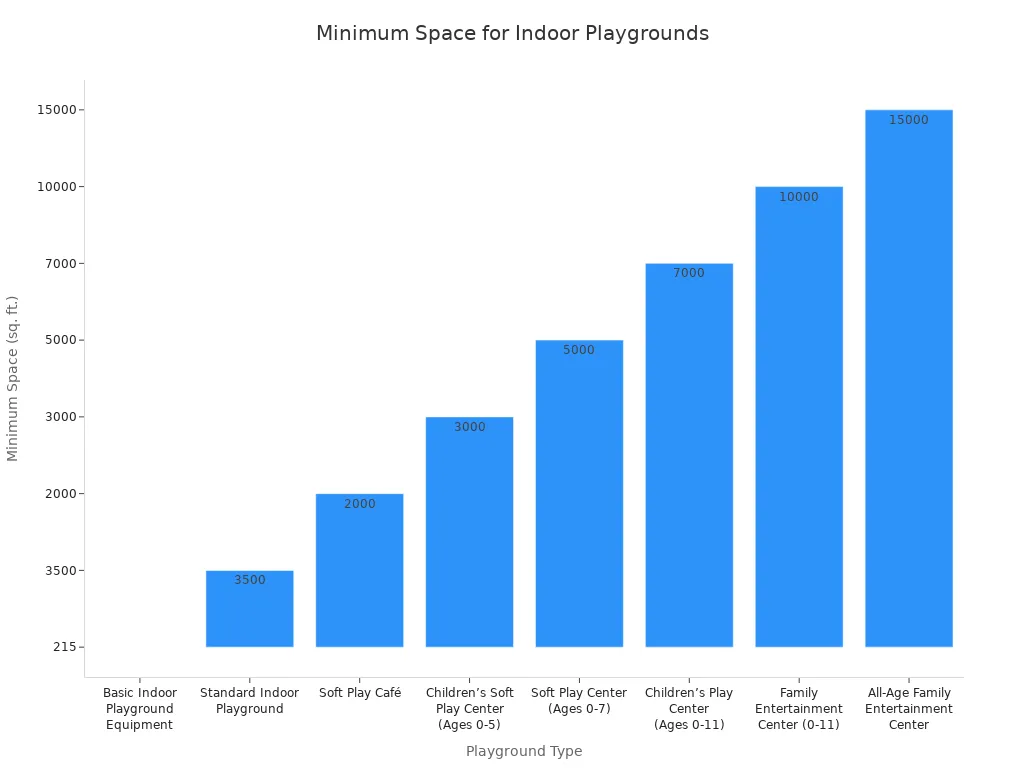
You need enough space for kids to play safely and for parents to relax. The size depends on the type of playground you want. Here's a quick guide:
|
Type of Indoor Playground |
Minimum Space Requirement |
|---|---|
|
Soft Play Café |
Up to 2,000 sq. ft. |
|
Children's Soft Play Center (Ages 0-5) |
3,000 - 5,000 sq. ft. |
|
Soft Play Center (Ages 0-7) |
5,000 - 7,000 sq. ft. |
|
Children's Play Center (Ages 0-11) |
Over 7,000 sq. ft. |
|
Family Entertainment Center (Ages 0-11) |
Up to 10,000 sq. ft. |
|
All-Age Family Entertainment Center |
15,000 - 40,000 sq. ft. |
Check the ceiling height too. Most playgrounds need at least 16 feet. Always plan for safety and enough room to move around.
Accessibility and Flow
You want every child and parent to feel welcome. Make sure entrances and exits are wide and easy to find. Leave plenty of space between play structures so kids can move freely. Use soft, even flooring to keep everyone safe.
- Add calm areas for kids who need a break.
- Include different levels of challenge for all abilities.
- Design spaces that help kids play together and make friends.
Note: Good flow and accessibility help families enjoy their visit and come back again.
Budgeting and Financial Planning
Cost Breakdown
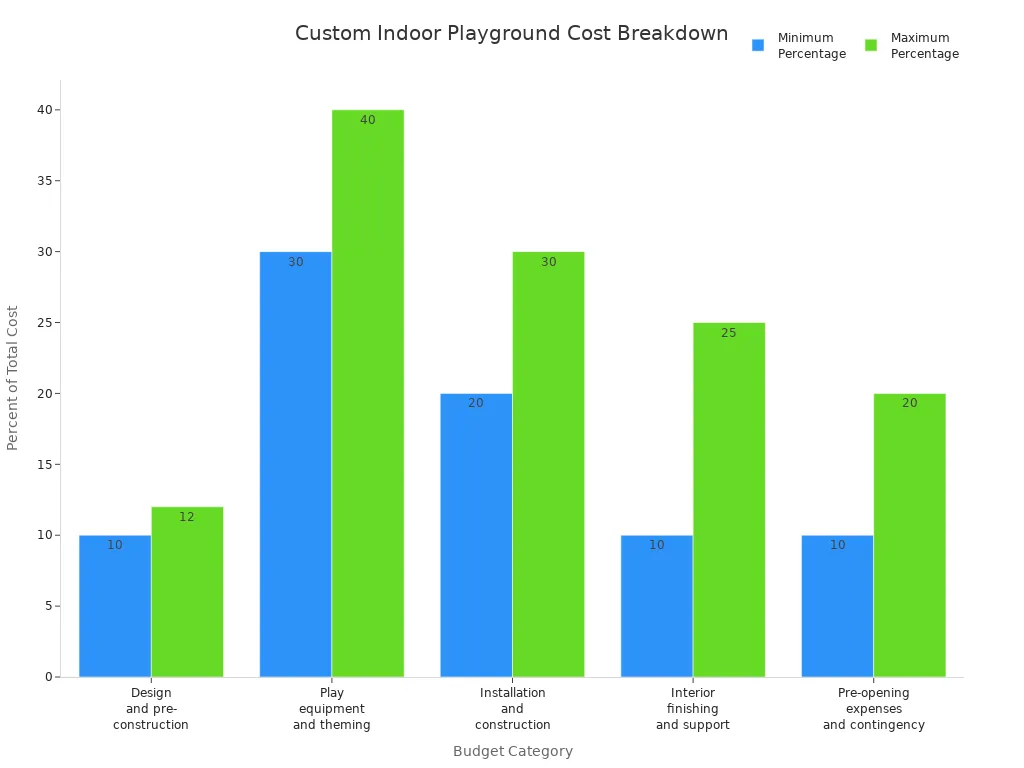
It is important to know how you will spend money before building your indoor playground. Costs can go up quickly, so planning helps you avoid problems. Most budgets have design, equipment, installation, finishing, and pre-opening costs. Here is a simple look at how costs are split:
|
Budget Category |
Percentage of Total Cost |
Cost Range (if applicable) |
|---|---|---|
|
Design and pre-construction |
10-12% |
$5,000 to $20,000 (design) |
|
Play equipment and theming |
30-40% |
$150-$250 per square foot |
|
Installation and construction |
20-30% |
About $52,000 for $144,000 equipment |
|
Interior finishing and support systems |
10-25% |
N/A |
|
Pre-opening expenses and contingency |
10-20% |
N/A |
Tip: Making a clear budget helps you stay organized and makes your business plan better.
Funding Options
There are many ways to pay for your playground. Some owners use their own money. Others get help from outside sources. Here are some common ways to get funding:
- Private funding from savings or family
- Angel investors who want to help new businesses
- Crowdfunding on websites
- Commercial loans from banks
- Grants from government or non-profit groups
- Sponsorships from local businesses
- Business contests with cash prizes
Note: Using more than one funding source can help your project succeed.
Budget for Upgrades
Your playground will need changes as time goes on. Kids get older, new trends appear, and equipment gets old. Save money for upgrades and repairs. Plan for new play areas, fresh paint, or better seats. Regular upgrades keep your playground safe and fun for families.
- Schedule inspections every year
- Replace old equipment
- Add new things to bring visitors back
Keeping your playground new helps you stand out and keeps families coming again.
Indoor Playground Design

Theme and Branding
Your playground's theme and branding are very important. They help people remember your business. Think about what makes your playground special. Do you want a jungle, ocean, or space theme? Custom themes make your playground different from others. Families will remember their visit.
- Split your audience into groups by age or interests.
- Use Facebook, Instagram, and TikTok to show your theme.
- Send fun newsletters with special deals to families.
- Work with local businesses and schools to promote your playground.
- Make different themes for each play area.
- Add fun things like sensory walls or obstacle courses.
- Create spaces where kids and adults can play together.
You can set up themed pop-up playgrounds at events. This helps more families learn about your playground. Special play zones make families want to come back.
A strong theme helps your playground look friendly to families. When you think about the whole family, people stay longer. They will want to visit again.
Age Groups and Inclusivity
You want every child to feel safe and welcome. Think about all ages and abilities when you design your playground. Add features that help everyone join in.
|
Feature |
Purpose |
|---|---|
|
Sensory Opportunities |
Activities for hearing, seeing, touching, tasting, and smelling for all kids. |
|
Support Features |
Places to rest, cool off, or warm up for everyone. |
|
Inclusive Equipment |
Equipment that is safe and fun for all children. |
|
Ramps |
Let all kids reach higher areas safely. |
|
Soft Structures |
Soft play areas that are safe for everyone. |
|
Seating |
Comfy seats for parents to watch and talk. |
Sensory activities and soft play areas help all kids have fun. Ramps and support features let kids with different needs play too. Parents can relax in comfortable seats and watch their children. These ideas make your playground a place where everyone feels welcome.
Reviewing Design Options
Now look at your design drawings and make changes. Check out new trends to make your playground fun and safe.
- Add screens or digital games for kids who like tech.
- Put in climbing walls or obstacle courses for exercise.
- Use play systems you can move or change as you grow.
- Pick surfaces that are easy to clean and keep open spaces.
- Choose eco-friendly equipment to help the planet.
- Match your play areas to your brand's theme.
- Always add features that help everyone play.
Safety is the most important thing in playground design. You must follow safety rules to protect everyone.
|
Standard |
Region |
Description |
|---|---|---|
|
ASTM F1918-12 |
USA |
First safety rule for indoor playgrounds. |
|
EN 1176 |
Europe |
Safety rule for all playgrounds. |
|
AS 3533.4.2-2013 |
Australia |
Safety rule for indoor playgrounds. |
|
CSA Z614-07(R2012) |
Canada |
Safety rule for all playgrounds. |
-
Make sure all equipment meets ASTM rules for safety.
- Use foam tiles or rubber under play equipment.
- Check for gaps that could hurt fingers or heads.
- Leave space between equipment to stop crashes.
- Put up safety rules at the entrance and inside.
Tip: A cool design brings families in, but a safe playground makes them return.
When you design your own playground, you make a place that is fun and safe. Look at your choices, focus on safety, and match your design to your dream. With good planning, your playground will be a favorite spot for families.
Equipment and Indoor Playground Supplier
Choosing Certified Equipment
You want kids to be safe when they play. That means you need indoor playground equipment with the right certifications. When you shop, look for equipment that has passed safety tests. These certifications prove the equipment is safe and good quality. Here's a simple list of what to check:
| Certification --- Description | | --- --- | | ASTM F1918 --- Makes sure soft play equipment is strong and safe in North America. | | CPSIA --- Requires non-toxic, phthalate-free, and lead-free materials for children's products. | | NFPA 701 --- Tests fabrics for flame resistance. | | UL 94 --- Checks plastics for fire resistance. | | EN 1176 --- Sets safety standards for playgrounds in Europe. | | EN 71 --- Covers toy safety standards for materials. | | CE Certification --- Shows compliance with EU rules. | | EU REACH Regulation --- Ensures materials are free from harmful chemicals. | | AS3533.4.2-2013 --- Follows Australian safety standards for indoor playgrounds. | | CSA Z614 --- Defines requirements for public-use play equipment in Canada. | | ISO Standards --- Ensures quality and environmental responsibility. |
Tip: Always ask your indoor playground supplier to show proof of these certifications before you buy anything.
Selecting a Reliable Supplier
Choosing the right indoor playground supplier makes your job easier. You want someone who helps you from start to finish. Here's what you should look for in a supplier:
| Criteria --- Description | | --- --- | | Provider's Credentials --- Pick suppliers with lots of experience and good reviews. | | Service Offerings --- Make sure they help with installation and support. | | Warranty Coverage --- Look for strong warranties on equipment. | | Customization Options --- Ask if you can change equipment to fit your needs. | | Safety Standards --- Check that they follow all safety rules. | | Availability of Parts --- Make sure you can get replacement parts easily. |
-
Ask your indoor playground supplier about ASTM standards and warranty details.
-
Make sure they help with installation and support after you buy.
-
Pick a supplier who can change equipment to fit your space.
Note: A good indoor playground supplier helps you avoid problems and keeps your playground safe for everyone.
Compliance and Safety Standards
You must follow safety standards to keep kids and your business safe. These rules cover things like fire safety and safe materials. ISO standards are used in many countries and help you meet safety rules everywhere. Here are some important standards to know:
| Standard --- Description | | --- --- | | ASTM F1918-22 --- Safety guidelines for soft-contained play equipment. | | CPSC --- Handbook for public playground safety. | | NFPA 701 --- Fire resistance for fabrics. | | UL 94 --- Flammability for plastics. | | AS3533.4.2-2013 --- Australian indoor playground safety standard. | | CSA Z614-07(R2012) --- Canadian safety standard for playgrounds. | | ISO Standards --- International safety standards for playgrounds. |
- Make sure your indoor playground supplier follows all these safety rules.
- Use soft flooring to help prevent injuries from falls.
- Check for spaces where kids could get stuck and keep equipment spaced out.
- Plan regular checks and fix things when needed.
Safety standards help keep your playground safe and make families trust your business.
Installation Process

Setting up your custom play space is important. You want everything to work well. Kids need to play safely. Parents should feel relaxed. Let's look at how indoor playground installation works.
Hiring Certified Installers
Always pick certified professionals for installation. These experts follow safety rules. They make sure equipment is set up right. The right team protects your business and visitors.
Here are the main certifications and standards installers need:
|
Certification/Standard |
Description |
|---|---|
|
ASTM International |
Makes safety rules for playground equipment. |
|
IPEMA |
Checks if equipment meets safety standards. |
|
CPSC |
Gives safety tips for public playgrounds. |
|
CPSIA |
Makes sure products follow safety laws. |
Ask your installer about their training and experience. Make sure they know your design and special features. Certified installers help you avoid safety problems. This step keeps kids safe and helps you worry less.
Tip: Expert installers help you avoid mistakes and keep your playground safe for a long time.
Installation Steps
You want installation to be easy and smooth. Here's what usually happens:
1. Hire certified indoor playground installers. 2. Use equipment that is tested and certified. 3. Make sure your design has enough space and safe flooring. 4. Plan for regular checks and maintenance.
Installers start by looking at your design and space. They mark where each piece goes. Next, they build the play structures. They make sure everything fits your plan. They tighten bolts and add soft flooring. The team checks that every part matches your design and safety rules.
Walk through the playground with your installer before opening. Look for sharp edges or loose parts. Check for missing labels. Make sure you can see the manufacturer's details on each piece. This helps with future checks and repairs.
Note: Good installers answer your questions and show you how to care for your playground.
Safety Inspections
Safety inspections are needed before you open. You want to find problems early. Every piece of equipment must meet safety rules. Inspectors check for clear labels, strong materials, and safe design.
Here are some important safety standards:
|
Safety Standard |
Description |
|---|---|
|
ASTM F1918-22 |
Safety rules for soft play equipment. Checks materials, structure, padding, and spacing. |
|
CPSC Handbook |
Safety tips to prevent injuries and follow rules. |
Common problems found during inspections are missing labels, loose bolts, or old padding. Sometimes equipment is too close together. The fall zone may be too small. Not checking often can make things unsafe. Old equipment can cause injuries. If you do not fix problems, safety gets worse.
To keep your playground safe, do these things:
-
Check all play equipment every year.
-
Do regular maintenance to keep things safe.
-
Fix any hazards right away.
Never skip safety inspections. They help you find problems before they get bad. When you follow safety rules and do maintenance, families know you care about them.
Remember: A safe playground helps families trust you and want to come back.
Staff Training and Pre-Opening
Staff Training
You want your team to feel confident and ready before opening day. Good training helps everyone know what to do and how to keep kids safe. Here are some best practices for training your staff:
- Emergency Response Protocols: Teach your team how to handle emergencies. Go over evacuation plans and first aid steps.
- Daily Inspections: Show staff how to check for broken equipment and keep the area clean every day.
- Hygiene and Sanitation Standards: Train everyone on cleaning routines and personal hygiene. Clean hands and surfaces help keep kids healthy.
- Communication & Supervision: Practice customer service skills. Staff should know how to talk to parents and kids, solve problems, and watch for safety issues.
- Regular Equipment Maintenance: Teach your team to spot wear and tear. Schedule regular checks to keep everything safe.
Tip: Role-playing real-life situations during training can help your staff feel more prepared.
Safety Protocols
You need strong safety rules before you open your doors. These protocols help protect kids and give parents peace of mind. Here's a quick look at the most important safety protocols:
|
Safety Protocols |
Description |
|---|---|
|
Regular Safety Inspections |
Check all equipment often to make sure it is safe and working well. |
|
Proper Signage |
Put up clear signs to warn about hazards and show how to use equipment. |
|
Age Restrictions |
Set age limits so older kids do not play in areas meant for younger ones. |
|
Supervision Measures |
Make sure staff always watch the play areas and step in when needed. |
Note: Review these protocols with your team often. Safety is everyone's job.
Final Walkthrough
Before you open, do a final walkthrough with your staff. Walk through every area and check for problems. Look for loose bolts, missing signs, or dirty spots. Test all equipment. Make sure safety mats are in place. Ask your team to point out anything that does not look right.
-
Use a checklist to stay organized.
-
Fix any issues right away.
-
Remind your staff to greet families with a smile.
A careful walkthrough helps you catch small problems before they become big ones. When your team feels ready, you can open your playground with confidence and excitement! 🎉
Launch and Marketing
Grand Opening
Your grand opening is very important for your playground. You want families to feel happy and excited to come. Ask local news to visit and talk about your event. This helps more people learn about your playground. Plan fun things like family parties or charity events. These activities make people talk about your playground. Show that you care about your town. Make sure your playground is clean and has cool themes. Open on weekends and holidays so more families can come. Keep telling people about your playground before and after the big day.
Tip: Give out small prizes or free play time at your grand opening. Families enjoy surprises and will remember your playground.
Marketing Strategies
You need good marketing to bring families back again. Use social media like Facebook and Instagram to share news. Post nice photos and videos of your playground. Show what makes your playground special and fun for kids. Tell people about special events and deals to get new visitors. Send news stories to local media for more attention. Share sneak peeks and work with influencers to get people excited. Write blog posts and make videos to keep your playground in people's minds.
| Marketing Channel --- Benefit | | --- --- | | Social Media --- Quick way to reach families and share news | | Influencer Partnerships --- Builds trust and excitement | | Content Marketing --- Keeps your playground seen online | | Loyalty Programs --- Gets families to visit again |
A busy playground has visitors all week, not just weekends. Offer different hours and special deals to fill your schedule.
Community Engagement
You want your playground to be loved by your neighborhood. Work with local groups and schools to host events. Help with local causes and join with nearby businesses for deals. Invite families to join community days or charity events. When you help your community, families feel close to your playground and want to come back.
Note: Making strong connections with your community helps your playground grow and stay liked.
🎉 Your launch and marketing make your playground a place families want to visit!
Maintenance and Upgrades
Keeping your indoor playground in top shape helps you protect children and keep families coming back. You want your space to feel fresh, clean, and safe every day. Let's look at how you can make maintenance easy and upgrades smooth.
Regular Inspections
You should set up a routine for checking your playground. Start with daily equipment checks. Train your staff to spot problems like loose bolts, unclean surfaces, or tripping hazards. Every month, do a deeper inspection to look at hidden parts. Once a year, bring in a professional to inspect everything. This helps you catch issues early and keeps your playground up to safety standards.
Here's a simple checklist for inspections:
-
Look for broken or worn parts.
-
Check for rust or sharp edges.
-
Make sure all safety mats are in place.
-
Test emergency exits and alarms.
-
Keep records of every inspection.
Tip: Keep signs ready to close off any area that needs repair or cleaning. This shows families you care about safety.
Cleaning and Repairs
Clean spaces make families feel welcome. You want to clean all surfaces, mats, and equipment every day. Use safe cleaning products that do not harm children. If you find damage, fix it right away. Always follow the manufacturer's instructions for repairs. This keeps your equipment strong and safe.
Train your team to report problems as soon as they see them. Quick repairs stop small issues from becoming big ones. Keep a log of all cleaning and repair work. This helps you track what needs attention and shows your commitment to safety.
Upgrading Equipment
Upgrades keep your playground exciting and safe. Over time, equipment can wear out or become outdated. Plan for upgrades in your budget. Add new play features or replace old ones to meet the latest safety standards. Ask families what new things they want to see. This helps you stay ahead of trends and keeps visitors happy.
When you upgrade, check that all new equipment meets safety rules. Work with your supplier to make sure everything fits your space and follows safety guidelines. Regular upgrades show families you care about their experience and safety.
You now know the main steps to plan and install a custom indoor playground. Start with research, set your goals, pick the right space, and choose safe equipment. Each step helps you build a place where children can play and families feel welcome. Ready to take the next step? Talk to a playground supplier or grab a business planning checklist. Your new playground can boost your business and bring joy to your community!
FAQ
How long does it take to install an indoor playground?
Most playground installations take two to four weeks. The timeline depends on your space size and the complexity of your design. You can speed things up by preparing your site before the installers arrive.
What safety standards should I follow?
You should follow ASTM, CPSC, and local building codes. These standards help keep your playground safe for everyone. Ask your supplier about certifications and regular safety checks.
Can I customize the playground for different age groups?
Yes! You can design play zones for toddlers, preschoolers, and older kids. Custom layouts help you create safe, fun spaces for children of all ages.
How do I keep my indoor playground clean?
Set up a daily cleaning routine. Use safe cleaning products. Train your staff to spot messes and fix them right away. Clean equipment and floors often to keep your space fresh.
What should I do if equipment breaks?
Take broken equipment out of use right away. Call your supplier for repairs or replacement parts. Keep a repair log so you can track issues and fix them quickly.
